

Choosing the right web address is an important step for any online project. Whether you launch a startup or personal blog, your choice shapes how people see your brand. Understanding the .com vs .net vs .org vs .xyz options helps match your online presence with your long-term goals.
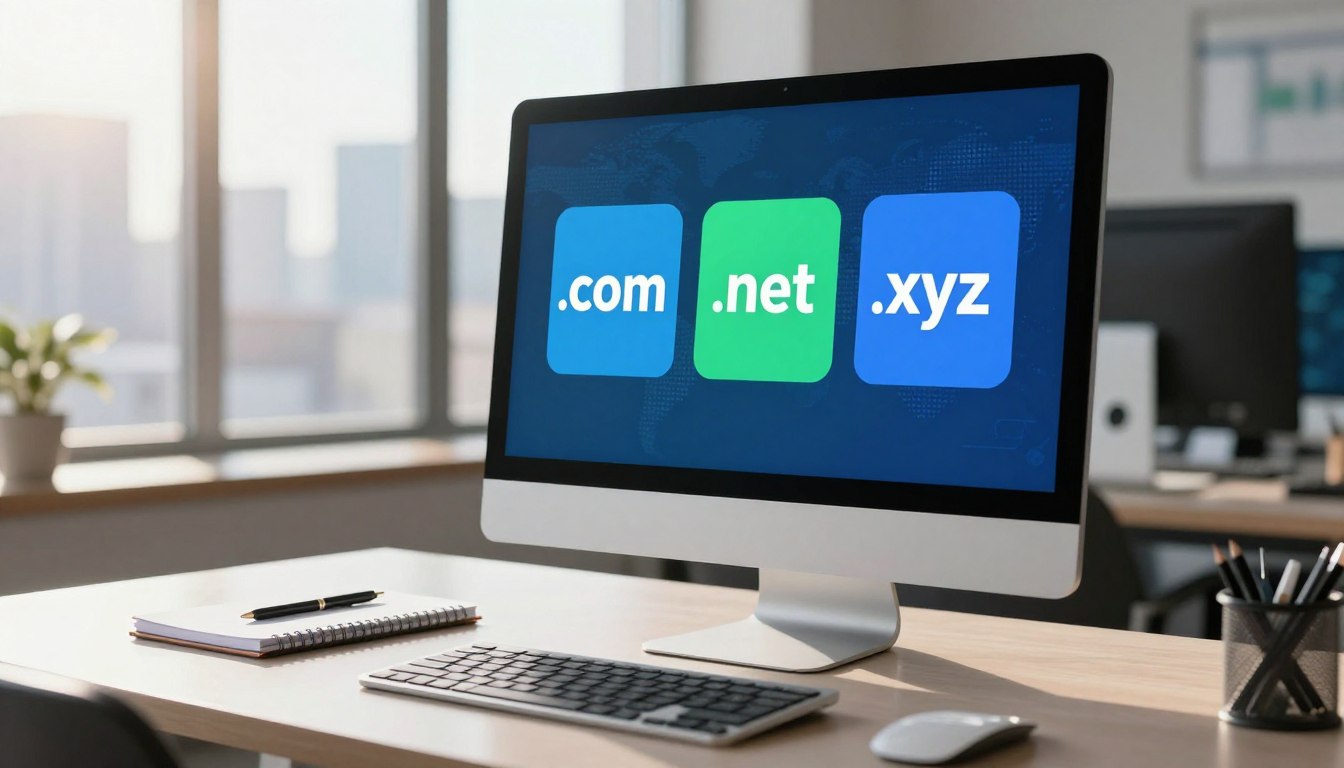
Many people worry that a domain choice will hurt search rankings. Google says generic top-level suffixes do not offer an automatic ranking advantage. Credibility and memorability matter most when deciding Which Domain Should You Buy? for your audience.
Different organizations can succeed with unique domain endings. Commercial businesses often choose traditional endings, while nonprofits and tech innovators may explore modern options. Finding the best domain extension means balancing your budget, industry expectations, and preferred name availability.
Key Takeaways
- Search engines do not inherently favor one specific suffix over another for ranking purposes.
- Trust and brand recognition are more vital than the technical extension you select.
- Commercial entities often benefit from the familiarity of established web addresses.
- Nonprofits and community groups frequently find success using specialized suffixes.
- Startups and tech companies may choose modern options to appear more innovative.
- Always prioritize a name that is easy for your target audience to remember and type.
What to Evaluate Before Choosing a Domain Extension
Before choosing a domain extension, weigh the factors that shape your digital presence. A careful review prevents problems and keeps your online identity consistent and professional.
Brand fit, audience expectations, and long-term positioning
Choose an extension that fits your brand and matches your audience’s expectations. For example, a .com domain often signals commercial stability and global reach. Community-focused brands may find other options better suited to their mission.
Consider how your domain will look on business cards, marketing materials, and social media profiles. A strong brand fit builds domain credibility with visitors. Think about your business goals for five or ten years before choosing.
Availability, registration pricing, and renewal costs
Many users focus only on the first domain registration cost, but that number can mislead them. Registrars may offer deep first-year discounts to attract new customers. Check the regular renewal price to measure your true long-term investment.
Check whether your preferred extension is available without awkward hyphens or numbers. A clean, memorable name often matters more than a cheap registration fee. Choose sustainable costs instead of short-term promotional savings.
Trust, memorability, and perceived legitimacy
Users often form subconscious opinions from a website’s suffix. A familiar domain extension can make a site seem more legitimate to new visitors. If your audience knows certain endings, a different choice may require extra marketing.
Memorability also helps bring direct traffic to your site. A short, easy-to-spell address helps people return without using a search engine. Building domain credibility starts with a name people can remember and type correctly.
SEO, email deliverability, and technical performance
Many beginners wrongly believe a specific SEO domain extension will automatically improve search rankings. Search engines generally treat most generic top-level domains alike for ranking potential. Content quality and user experience remain the main drivers of search visibility.
Technical factors such as email deliverability also depend little on the extension. Correct DNS settings, including SPF, DKIM, and DMARC, matter far more than your chosen suffix. Build a strong technical foundation instead of seeking a “magic” extension promising better performance.
Detailed Review of .com, .net, .org, and .xyz Domains
Choosing a domain extension starts with knowing each option’s purpose. The right suffix supports your online presence and business goals.
.com domains
Overview and key features
The .com extension is the internet’s best-known domain. It remains the standard for commercial entities and global businesses.
Pros of choosing .com
This extension offers unmatched brand authority and strong user trust. Most users type .com when seeking a company website.
Cons and limitations of .com
Its main drawback is high competition. Finding a short, memorable, available name can be difficult.
Best uses and ideal buyers
It suits e-commerce stores, corporate websites, and businesses seeking a professional, mainstream image.
Recommendation for businesses and personal brands
If your desired name is available, always prioritize the .com extension for maximum reach and credibility.
.net domains
Overview and key features
Originally made for network providers, the .net domain now supports many digital projects.
Pros of choosing .net
It suggests technical expertise. Many users connect this extension with infrastructure and connectivity.
Cons and limitations of .net
It has less recognition than .com. Some users may type .com from habit, causing traffic loss.
Best uses for technology and network-focused sites
This is an excellent tech domain for internet providers, software developers, and database services.
Recommendation for businesses that cannot secure a .com
If your first choice is taken, a .net domain offers a reliable, professional fallback.
.org domains
Overview and key features
The .org domain is widely known for non-commercial entities. It suggests trust and public service.
Pros of choosing .org
It signals a mission-driven focus. Users often view these sites as altruistic and less profit-oriented.
Cons and limitations of .org
It usually does not suit for-profit businesses. A commercial store using it may confuse its audience.
Best uses for nonprofits, communities, and public-interest projects
This extension suits charities, educational institutions, and community-based organizations.
Recommendation for organizations and mission-driven brands
For social impact or community projects, an .org domain clearly establishes your identity.
.xyz domains
Overview and key features
The .xyz domain is a modern, flexible choice for younger, digital-native users. It also supports creative branding.
Pros of choosing .xyz
It provides many short, catchy names. This makes it a popular startup domain for new ventures.
Cons and limitations of .xyz
It lacks the history of older extensions. Traditional industries may see it as less established or experimental.
Best uses for startups, creators, and experimental projects
It suits Web3 projects, creative portfolios, and innovative tech ventures seeking attention.
Recommendation for modern and budget-conscious brands
If you want a unique name without a premium .com price, an .xyz domain offers a smart, forward-thinking solution.
| Extension | Primary Use | Trust Level | Availability |
|---|---|---|---|
| .com | Commercial | Very High | Low |
| .net | Technical | Medium | Medium |
| .org | Nonprofit | High | Medium |
| .xyz | Modern/Startup | Moderate | High |
How Registration and Renewal Costs Compare
The price shown when you register a domain is often only the start of your financial commitment. Many registrars attract new users with low introductory rates. These prices may not show the true cost of keeping your digital asset for years.
First-year promotional pricing versus standard renewal pricing
Most registrars offer deep first-year discounts to win your business. New domains may cost as little as $0.99, but the renewal price can reach $15 or $20 after twelve months. Check the fine print for the standard rate before buying.
Typical cost differences among .com, .net, .org, and .xyz
The domain registration cost changes greatly with the extension you choose. .com domains usually have stable prices, while newer extensions like .xyz may have unstable pricing. Compare long-term extension costs to keep your budget predictable.
Privacy protection, transfers, and other registrar fees
Besides the base fee, plan for services that protect your information. Many providers include domain privacy at no cost, but others charge an annual fee for this essential service. Check for transfer fees before moving your domain to another registrar.
Some registrars also charge redemption fees after a domain expires. Check whether your provider offers automatic renewal to prevent accidental domain loss. These settings help maintain domain availability for your brand.
Why long-term ownership cost matters more than the initial discount
Focusing on the first discount can cause higher costs over time. A slightly higher upfront fee may be better than a provider that raises the renewal price significantly each year. Choose registrars with clear prices and standard domain privacy.
Smart planning means calculating total ownership costs for at least three to five years. Looking beyond the first-year promotion protects your business from unexpected budget increases. Predictable costs let you focus on growing your website instead of handling administrative surprises.
Which Extension Builds the Most Credibility?
Your domain name acts as your business’s front door. The extension sets the tone for each visitor. Strong domain credibility often depends on matching user expectations, so choose a suffix that supports your professional online presence.

Why .com remains the default choice for commercial businesses
For most users, .com feels synonymous with the internet. It is the most brandable domain for companies seeking broad appeal. Customers often see a .com as a legitimate, established business domain.
This familiar extension makes discovery easier. It is widely recognized and suggests permanence, unlike some newer or niche extensions. For startups, choosing .com can be the safest way to build trust quickly.
When .org creates stronger expectations of nonprofit or community status
.org has a clear reputation as a home for cause-based organizations. Users often connect it with a nonprofit domain that puts public service before profit. It remains a leading choice for charities, educational institutions, and community groups.
If your site provides information or supports a mission instead of selling products, .org signals transparency. Visitors may trust an .org site more when seeking resources or advocacy. It clearly shows that the organization is mission-driven.
How .net and .xyz perceptions vary by audience and industry
.net is often linked to technology, infrastructure, and internet service providers. It can suit a business domain in the tech sector. However, it lacks .com’s universal commercial strength.
.xyz is a modern, flexible choice for experimental projects or Web3 ventures. It is highly brandable, but may not show the same traditional authority. Its meaning depends greatly on the audience’s knowledge of emerging digital trends.
Trust signals that matter more than the extension itself
Your extension is only one part of the puzzle. True domain credibility grows from consistent user experiences and professional standards. A secure, well-kept website will outperform a poorly designed site, whatever the suffix.
| Extension | Primary Association | Best For |
|---|---|---|
| .com | Commercial Authority | E-commerce & General Business |
| .org | Public Interest | Nonprofits & Charities |
| .net | Technical Infrastructure | Tech & Network Services |
| .xyz | Modern Innovation | Startups & Creative Projects |
To build trust, use HTTPS encryption and show clear contact information. High-quality content, clear policies, and professional design matter more than the extension. Focus on these elements to leave visitors with a lasting, positive impression.
SEO, Branding, and Marketing Differences
Many myths surround domain extensions, but their effect on your online presence is clear. Business owners often fear that a suffix will decide their search success. Yet high-quality content and a good user experience remain the best long-term growth strategy.
How Google treats different generic top-level domains
Google treats most generic top-level domains alike when ranking websites. Whether you choose a traditional or newer option, it values the relevance and authority of your content. An SEO domain extension does not exist as marketers hope; your site’s performance depends on technical health and user engagement.
Memorability, direct traffic, and word-of-mouth referrals
Beyond search rankings, your choice of domain extension affects how easily customers remember your site. A short, punchy address is easier to share in conversation or during a podcast interview. When users recall your URL, direct traffic becomes more likely and signals brand strength.
Brand consistency across websites, email addresses, and social profiles
Maintaining one digital identity is essential for professional credibility. Using the same domain for your website and professional messages builds trust and projects stability. That clean, professional address improves email deliverability, helping messages reach inboxes instead of spam folders.
Choosing an extension without forcing awkward spelling or extra words
Trying to secure a specific extension can lead to poor naming choices. Hyphens, numbers, or extra words may confuse your audience; prioritizing clarity over a suffix protects your brand. Choose a brandable domain that is easy to spell and pronounce, even with a modern or alternative extension.
Best Domain Extension for Common Website Types
Your domain extension acts as a digital handshake with your audience. The right suffix shows visitors your purpose before they reach your homepage. Whether you launch a local shop or global platform, matching industry norms is a smart strategic move.
Small businesses and online stores
For local retailers and e-commerce shops, the business domain of choice remains the classic .com. Customers connect this extension with stable, established businesses. A .com builds trust when you process payments and protect customer data.
Technology companies and software products
If you are building a tech domain, you can highlight innovation in many ways. The .com remains popular, but many software firms choose .net for infrastructure and networking. This extension fits digital products and services with a technical focus.
Nonprofits, charities, and member organizations
A nonprofit domain should clearly share your mission with the public. The .org extension remains the gold standard for groups that put community impact before profit. It tells donors and volunteers that your site supports a cause, not a commercial transaction.
Personal brands, portfolios, and creative projects
Creative professionals seek a best domain extension that shows their unique identity. .com looks professional, while artists and writers often choose .me or .design for a personal touch. These options support creative branding and keep portfolios easy for potential clients to find.
Startups, Web3 projects, and experimental digital products
Modern disruptors often choose a startup domain with a fresh, forward-thinking feel. .xyz has gained significant traction among Web3 projects and experimental tech ventures. It shows that your brand is agile, modern, and ready for the internet’s future.
Domain Availability, Alternatives, and Purchase Strategy
Domain registration needs a clear plan to protect your brand. Before choosing a web address, check domain availability to confirm your idea can work. A smart plan prevents future problems and supports a professional online image.
What to do when the preferred .com is unavailable
Your ideal .com domain may already belong to someone else. If the name is taken, contact the owner and ask whether it is for sale. This process can cost much time and money, and it may lead nowhere.
Rather than chase a taken name, consider a different extension. Many modern businesses use alternative extensions to reach audiences with fresh, memorable names.
When a different extension is better than adding hyphens or numbers
Many beginners add hyphens or numbers to their chosen name to secure a .com domain. This choice often hurts memory and causes typos. Users may forget the hyphen’s location and visit a competitor’s site instead.
A clean, alternative extension is usually better than a cluttered name. A shorter, cleaner URL is easier to type and looks more professional on marketing materials and business cards.
Buying matching domains to protect a brand
After securing your primary address, consider buying brand-name variations. This defensive registration strategy keeps others from claiming similar names that could confuse customers. Owning common misspellings or related extensions keeps you in control of your brand’s digital footprint.
Checking trademark conflicts before registering a domain
Owning a domain does not give you legal rights to its brand name. Before buying, complete a thorough trademark search to avoid infringing on existing intellectual property. A simple trademark search can prevent costly legal disputes and the possible loss of your domain.
Choosing a reputable registrar and enabling automatic renewal
Choose a reliable registrar for long-term stability. Look for clear pricing and strong domain privacy features that hide your contact information from public databases. Enabling domain privacy is standard practice that protects you from spam and unwanted sales messages.
Always enable automatic renewal for your domains. Losing your domain because of an expired credit card or missed email can be catastrophic for your business. Enable automatic renewal to keep your site online indefinitely.
| Strategy | Benefit | Risk Level |
|---|---|---|
| Defensive Registration | Protects brand identity | Low |
| Trademark Search | Prevents legal issues | Very Low |
| Automatic Renewal | Ensures site uptime | None |
| Adding Hyphens | Increases availability | High |
.com vs .net vs .org vs .xyz, Which Domain Should You Buy?
Choosing between .com, .net, .org, and .xyz is more than a technical choice. Your domain extension sends a digital signal and shapes your brand’s first impression.

Choose .com for the broadest commercial credibility
Who benefits most from a .com domain
The .com domain remains the gold standard for businesses seeking global reach. It is the best domain extension for online stores, corporations, and trusted brands.
When paying more for an available .com is justified
If you want high traffic and strong brand authority, a premium .com may be worth the cost. Higher upfront prices can pay off through better recognition and easier recall.
Choose .net for technology, infrastructure, and practical alternatives
Who benefits most from a .net domain
The .net domain suits technology, software, and networking companies. It has a professional tone that fits service businesses and infrastructure providers.
When .net is preferable to a forced or confusing .com
Some available .com names require hyphens or numbers, which can weaken your brand. A clean, memorable .net domain offers a clearer professional choice.
Choose .org for nonprofits, communities, and public-interest work
Who benefits most from a .org domain
The .org domain suggests trust, shared missions, and community work. It suits charities, schools, and other organizations that depend on public support.
How to avoid misleading visitors with a .org commercial site
A commercial business using .org may confuse visitors who expect a nonprofit. Transparency is key; clearly explain your business type to protect visitor trust.
Choose .xyz for flexible, modern, and experimental brands
Who benefits most from a .xyz domain
The .xyz domain suits startups, Web3 projects, and creative portfolios. Its modern, tech-focused style appeals to younger audiences who value new ideas.
How to offset its lower familiarity with stronger branding
Because .xyz is newer, you may need more marketing to build awareness. A consistent visual identity and clear message can help people remember your site.
“A domain name is the most important piece of real estate in the digital world. Choose it with the same care you would use for a physical storefront.”
— Digital Branding Expert
Final buying recommendation by budget, audience, and business goal
Look beyond the first registration discount when choosing a domain. Always check the renewal price, because later costs may rise sharply.
| Extension | Best For | Trust Level | Cost Profile |
|---|---|---|---|
| .com | General Business | Very High | Moderate/High |
| .net | Tech/Services | High | Moderate |
| .org | Nonprofits | High | Moderate |
| .xyz | Startups/Web3 | Medium | Low/Variable |
Choose an extension that matches your long-term vision. For a legacy brand, choose .com; for niche tech or community projects, consider .net or .org.
Conclusion
Your domain extension shapes how people perceive your brand from the first click. Balance domain credibility with your project goals to build a lasting online presence. Choose a memorable name that supports your long-term vision.
Google does not boost rankings because of your chosen extension. Success depends on content quality and the value you provide visitors. Run a domain availability search that fits your brand identity, not a confusing name.
Review the total domain registration cost over several years to avoid budget strain. A professional business domain often justifies its higher price through greater trust and recognition. For a community project, a nonprofit domain can clearly signal your mission to potential supporters.
Evaluate your options before choosing a registrar. A thoughtful decision today can prevent costly rebranding later. Secure your digital home now and build your reputation on a solid foundation.
FAQ
Does choosing a .net or .xyz extension instead of a .com negatively impact SEO?
No. Google says its algorithms treat all generic top-level domains (gTLDs) equally. A .com domain gets no automatic ranking boost over .xyz or .net. Your search engine visibility depends on content quality, backlink authority, and user experience, not the extension.
Why is the renewal price often much higher than the initial registration cost?
Many registrars, including Namecheap and GoDaddy, offer first-year discounts to attract new customers. However, the standard renewal pricing shows the true cost of long-term ownership. When comparing .com vs. .net vs. .org, review the multi-year price structure to keep the domain within your business budget.
Is a .org extension appropriate for a for-profit online store?
Generally, it is not recommended. The .org extension creates a strong audience expectation of nonprofits, charities, and open-source projects like WordPress.org. Using it for a commercial business may cause trust issues or confuse customers expecting a mission-driven organization, not a retail brand.
What are the benefits of choosing a .xyz domain for a new startup?
The .xyz extension is popular among Web3 projects, tech innovators, and creative agencies. Most notably, Alphabet Inc. (Google’s parent company) uses it. It offers excellent availability for short, memorable names. These names are often taken in the .com space, so it suits modern, budget-conscious brands.
Should I register multiple extensions for the same brand name?
Yes, this strategy is called defensive registration. Companies such as Microsoft and Apple often secure the .com, .net, and .org versions of their trademarks to prevent cybersquatting. This protects your intellectual property and prevents competitors from using your brand traffic.
What should I do if my desired .com domain is already owned by someone else?
If the .com is unavailable, consider .net for a tech-focused business or .xyz for a modern digital presence. Avoid adding unnecessary hyphens or numbers to a .com. This often leads to poor memorability and sends users to a competitor’s website.
Does the domain extension affect professional email deliverability?
Technically, any valid TLD works for professional email through services like Google Workspace or Microsoft 365. However, some older spam filters may act more strongly against newer or “nontraditional” extensions. Using a .com, .net, or .org typically provides the highest email legitimacy across platforms.
Do I need to pay extra for WHOIS privacy protection?
It depends on the registrar. Some companies charge an extra fee, while Namecheap and Cloudflare include WHOIS privacy for free. This service hides your personal contact information from the public database. It helps prevent spam and identity theft, regardless of your chosen extension.


Best VPS Hosting for AI Applications
Do Free Domains Have WHOIS Privacy?




No Comment! Be the first one.